
Virtual Immigration Paralegal for Solo Practices: How to Get Help Without Hiring Full-Time
A solo immigration attorney can get trained paralegal help without hiring full-time by using dedicated virtual support on a defined task set — starting with intake and document chasing, expanding by review, and paying a predictable monthly rate instead of a full-time salary plus training time.
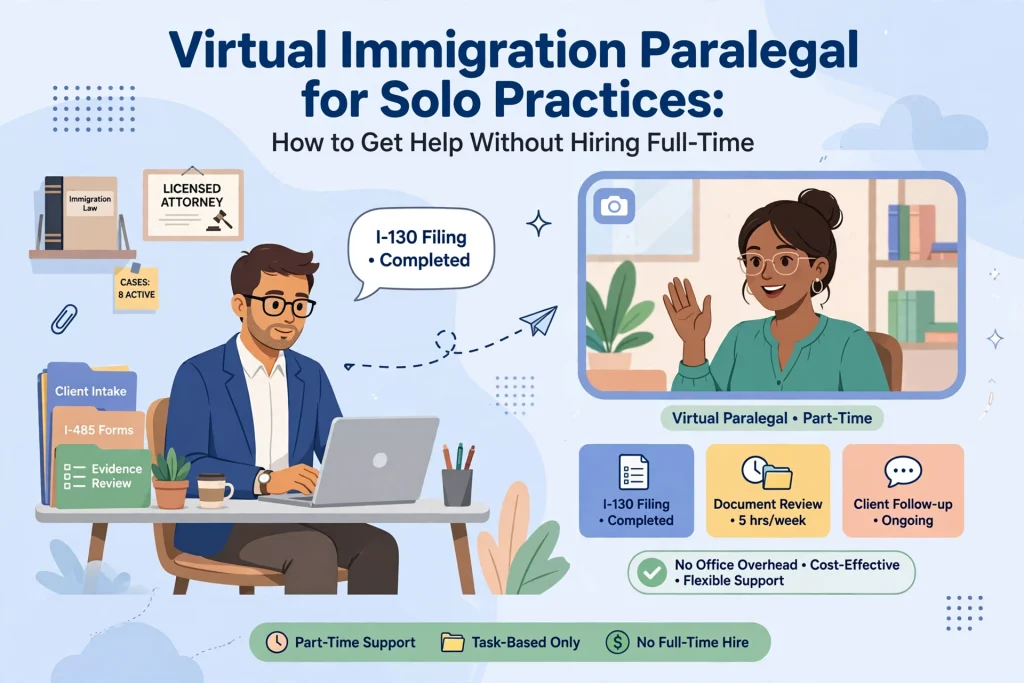
Solo practice is where the admin burden hurts most, because there is no one else to absorb it. This guide is for that firm.
Why solo firms feel the admin burden first
In a solo practice, the attorney is the intake team, the filing team, the deadline calendar, and the client-update team — plus the lawyer. Every hour on forms is an hour not on strategy, clients, or business development. And hiring in-house does not solve it quickly: 6–10 weeks to recruit, plus 2–4 months training a generalist, plus about $7,500/month fully loaded, is a large commitment for a one-attorney firm.
Dedicated virtual support from SMY is $2,800–$4,000/month, starts in days, and arrives AILA-trained — trained through American Immigration Lawyers Association (AILA) programs and resources — so week one is productive, not a training project.
What to delegate first as a solo attorney
Start with the tasks that eat attorney hours without needing attorney judgment:
1. Intake and document chasing — questionnaires, checklists, and follow-ups until files are complete.
2. Client status updates — so clients stop calling you for procedural news.
3. Form preparation — I-130 / I-485 / N-400 drafts, with edition-date and fee checks, ready for your review.
4. Deadline tracking — one master calendar, with advance reminders, for USCIS and EOIR dates.
Do not start with everything. Start with the bottleneck, measure it for two weeks, then add the next task family.
How supervision works with one attorney
Supervision is simpler in a solo firm, and more important:
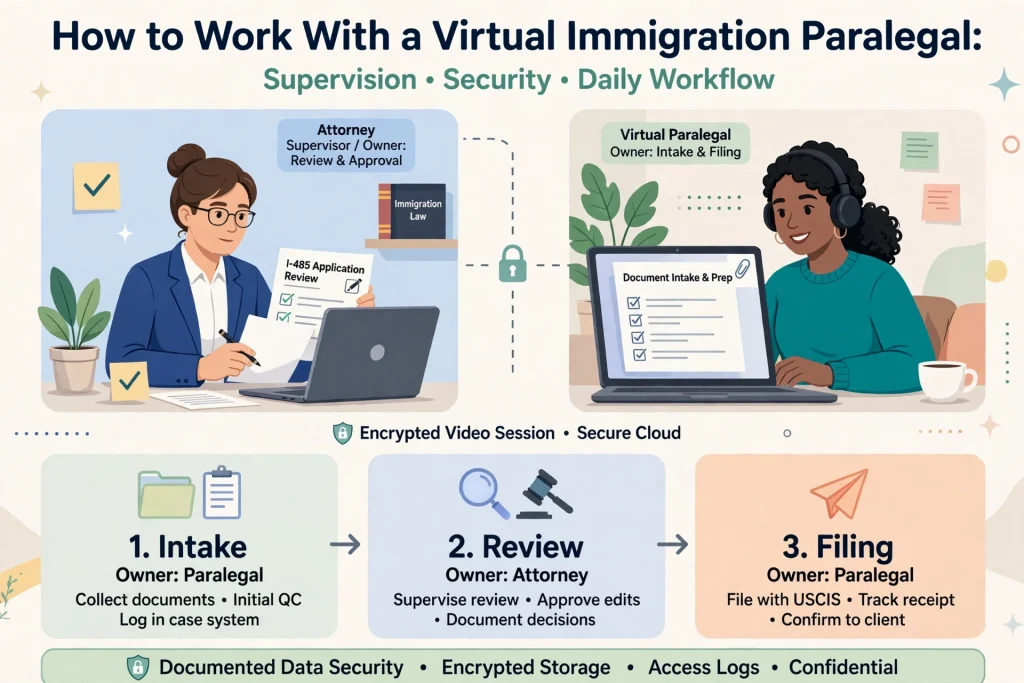
• You review every filing before submission, and sign where required.
• Legal questions route to you — the paralegal recognises them and sends them up, rather than answering them.
• Daily update, short and structured — completed, blocked, needs your input. That is the whole meeting.
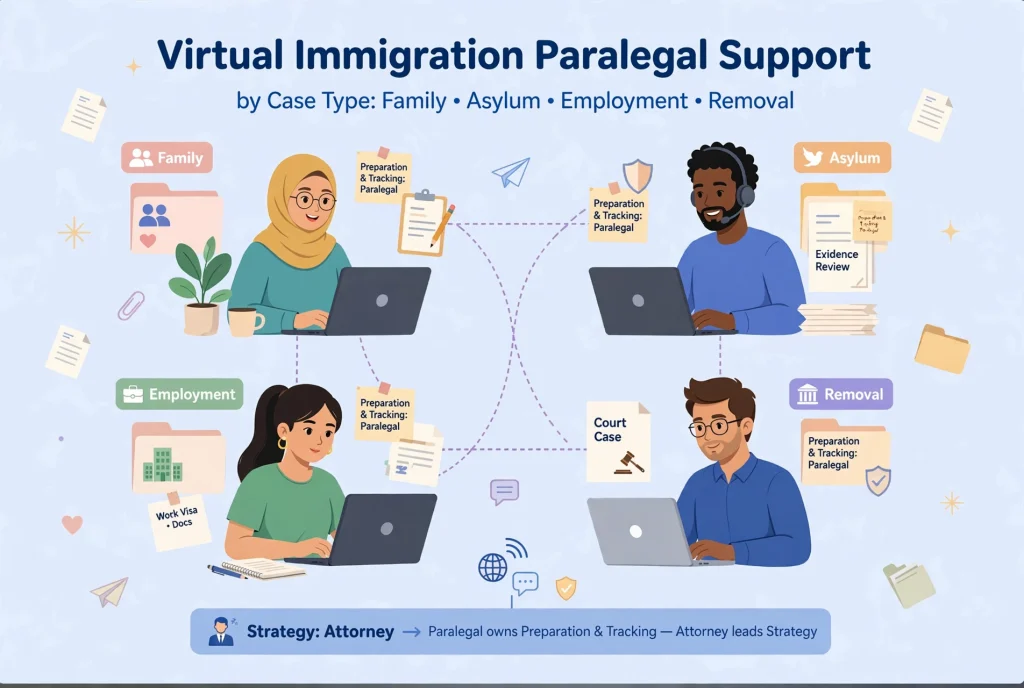
The rule stays the same: paralegal owns the *how* and the *when*; you own the *what* and the *why*.
How to keep costs predictable
• Agree the task set and hours upfront, and what changes them.
• Start part-time or dedicated on a defined scope, then expand as volume grows — do not commit to a full-time hire before you know the model works for you.
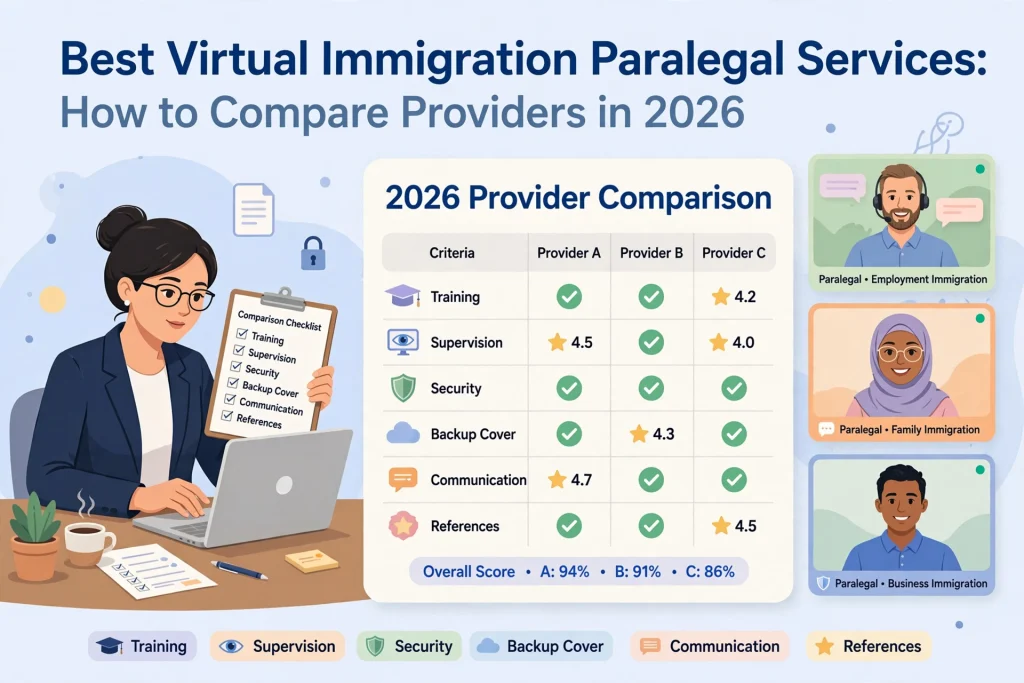
• Compare the full cost, not a headline rate. A cheap hourly helper who needs months of training costs more than dedicated trained support that is productive in week one. See Immigration Paralegal Cost: 2026 Pricing Guide and Virtual Immigration Paralegal Pricing Models Explained in this series.
Frequently asked questions
Will clients accept a virtual paralegal?
Clients accept faster updates and clearer communication. Most clients care that documents are chased, status is clear, and deadlines are met — not where the paralegal sits. Administrative communication from a trained paralegal is appropriate; legal advice stays with you.
What if I only have a few cases a month?
That is exactly when full-time hiring does not make sense, and dedicated part-time or project support does. Scope support to your volume, and scale it as cases grow.
What happens when my assistant is away?
Ask before you sign. With SMY, backup cover is included, so deadlines and client messages are still monitored. A solo attorney cannot afford a single point of failure.
The bottom line: solo practice does not need a full-time hire to stop losing attorney hours to admin. It needs a trained, dedicated virtual paralegal on a defined task set, with supervision and backup built in.
Book a free session with SMY Solutions, Brooklyn, NY, (929) 327-5878, and bring your bottleneck list — we will map the first tasks to delegate for your practice.
Comments (0)
No comments yet. Be the first to share your thoughts.